
FREQUENTLY ASKED QUESTIONS
COVID-19 – Message to new and existing patients
Dr Love’s practice is open
Opening hours:
- Monday to Friday: 9am – 5pm (subject to change)
Appointments can be made by telephoning:
Telehealth consultations are available
Please contact reception if you would prefer a telehealth consultation with Dr Love.
Face to face consultations
A face to face consultation may be necessary for some patients, if this applies to you, we ask that you please observe the following rules:
- If you are unwell with symptoms of fever, cough, sneezing, headache or lethargy we suggest you cancel your appointment and reschedule when symptom free
- If you have been in contact with someone with COVID-19 or you have recently returned from overseas travel you must isolate for 14 days. You can reschedule when symptom free.
If you are well we ask that you:
- Fill in your patient registration form electronically before your initial or first appointment (this will have been emailed to you)
- Do not come to your appointment any earlier than 15 minutes prior. You can call (03) 8644 2414 upon arrival at the hospital to check that Dr Love is running on time.
- Maintain a social distance of 1.5 meters from staff and other patients
- Wash your hands with the sanitizer provided before proceeding to the check – in desk
- Please wear a fitted face mask that covers your nose and mouth.
- Pay for your consultation using a credit card rather than cash.
Elective Surgery – As of 28th February 2022
28 February, 2022, the Victorian State Government has removed all restrictions on Elective surgery in the Melbourne.
“I wish everyone the best of health during these challenging times.”
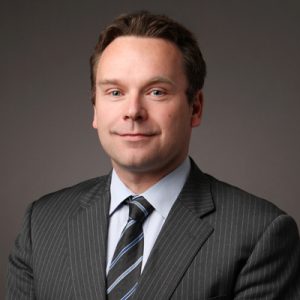
Dr David Love – Orthopaedic Surgeon
Why is an arthroscopy necessary?
Diagnosing injuries and disease begins with a thorough medical history, physical examination, and usually X-rays. Additional tests such as an MRI, or CT scan also may be needed. Through the arthroscope, a final diagnosis is made which may be more accurate than through “open” surgery or from X-ray studies.
What are the joints that can be viewed with an Arthroscope?
Although the inside of nearly all joints can be viewed with an arthroscope, six joints are most frequently examined with this instrument. These include the knee, shoulder, elbow, ankle, hip, and wrist. As engineers make advances in electronic technology and orthopaedic surgeons develop new techniques, other joints may be treated more frequently in the future.
Will physical therapy be required after surgery?
Getting a full range of motion, strength and flexibility back after surgery usually takes time. That’s where pre-operative exercise and education and post-operative physical therapy programs come in – to ensure you’re physically and emotionally prepared for surgery and to maximize your recovery after surgery.
What are the surgical fees associated with my surgery?
The fees are covered by your private health insurance and will be under a No-Gap policy, depending upon your health fund. Please note that this does not cover anaesthetic, pathology or radiology services which while often needed, are provided by different service providers.
A discussion about Dr Love’s fees will be provided at the time of your surgical booking. During this time; before your operation you should contact your private health insurance to clarify your level of cover with your private health membership.
What should I bring with me when I come for an appointment?
When you come for your appointment remember to bring the following:
- Referral letter from GP, family physician or other doctor
- Medicare card, DVA card, Pension Card
- Have your Private Hospital Insurance information with you
- Reports, X-rays, MRI’s, CT scans etc and any other relevant information.